Career Training
for Veterans Using
GI Bill® & VR&E
Turn Your Military Experience
Into Your Next Career.
The strengths that made you effective in uniform are the same ones that make a great reconditioning technician. You are not starting from zero, you are redeploying.
Discipline
Consistent quality and reliable follow-through on every vehicle.
Attention to Detail
The precision reconditioning demands, panel by panel.
Problem Solving
Diagnosing defects and choosing the right correction.
Accountability
Owning the finished result a customer pays for.
Process
Following proven procedures for repeatable results.
Teamwork
Working a shop floor or leading your own crew.
Mission Focus
Seeing a job through from intake to hand-off.
Working Under Pressure
Delivering when the schedule is tight.
Two Ways Veterans
Fund Training.
Most Veterans explore one of two benefit pathways. Each has its own eligibility rules and purpose, and its own dedicated guide.
Post-9/11 GI Bill®
An education benefit earned through qualifying service. Depending on eligibility and program approval, it may help with expenses like tuition, housing, and supplies.
Learn About This BenefitChapter 31VR&E
Veteran Readiness and Employment (formerly Voc Rehab) helps eligible Veterans with a service-connected disability prepare for and obtain suitable employment through an approved plan.
Learn About This BenefitA Practical Route
to a Skilled Career.
A traditional four-year college is a great fit for many Veterans. It is not the only path. After service, you can choose from college, technical education, apprenticeships, and approved career training.
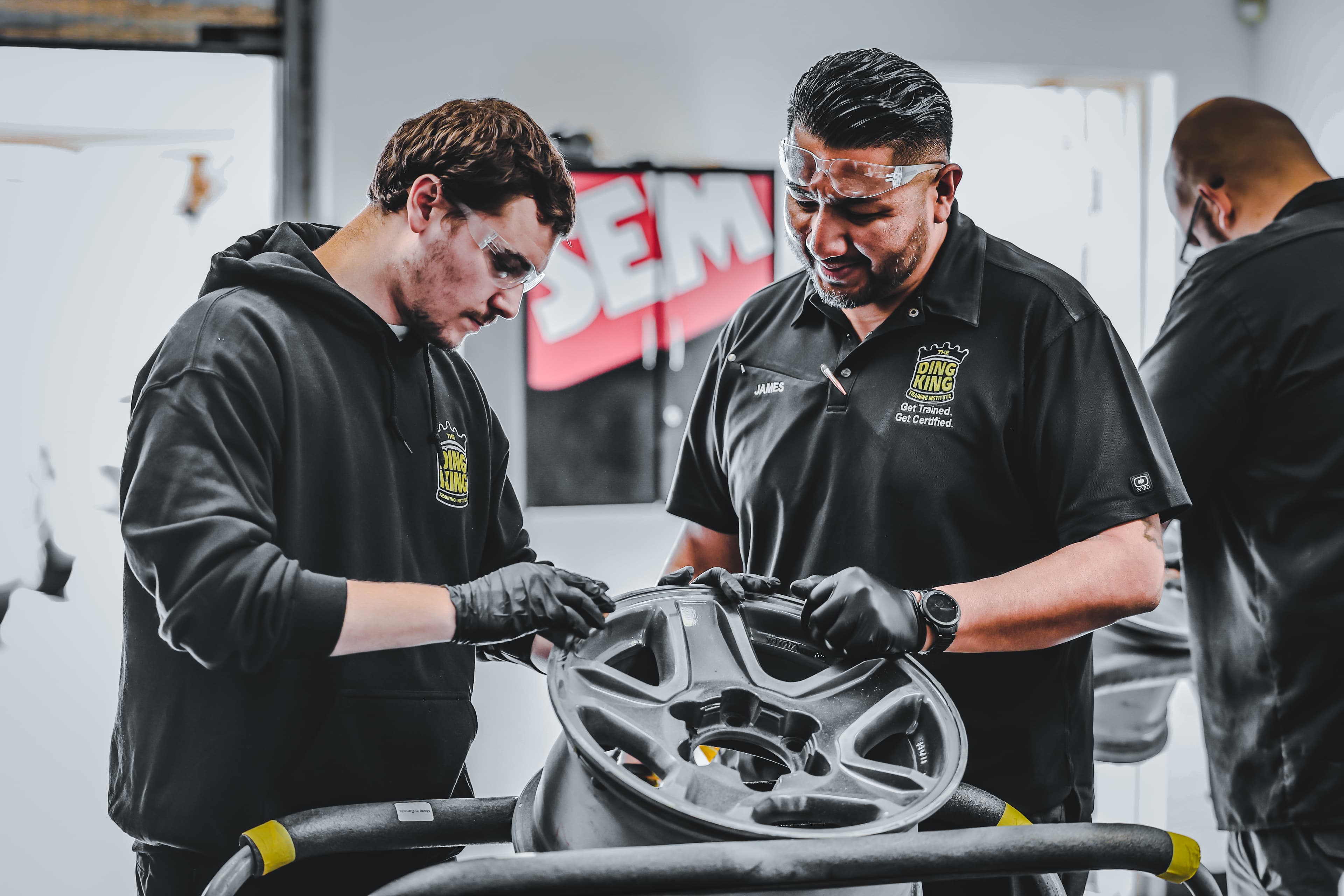
Some Veterans want a more direct route to working with their hands and building real skills. Automotive reconditioning is a hands-on, specialized trade, restoring and finishing vehicles, that rewards precision, process, and pride in the finished result.
The Ding King Training Institute focuses on that trade, then pairs it with the business and marketing knowledge to turn a skill into a career or a business of your own.
More Than a Trade.
The opportunity is broader than the physical work. Training is built to develop the complete skill set a career or business requires.
Trade Skills
Hands-on automotive reconditioning technique, the core of the work.
Professional Tools
Knowing the equipment, products, and supplies the trade relies on.
Business Education
Pricing, estimating, operations, and the basics of running the work.
Marketing & Sales
Finding customers, building a reputation, and closing jobs.
Career Development
Preparing for employment or building toward self-employment.
Have Your Certificate of Eligibility?
If you already have your Certificate of Eligibility or are currently working with a VR&E counselor, connect with The Ding King Training Institute admissions. We can help you explore the available training options, understand the enrollment process, and identify the documentation that may be needed. The VA makes final benefit determinations.
Explore the Benefit Guides
Post-9/11 GI Bill® Training
How the GI Bill® may support approved trade and career training.
Chapter 31VR&E Chapter 31
Veteran Readiness and Employment for eligible Veterans.
GuideGI Bill® Trade School
Why some Veterans choose a trade-school path after service.
VerifyVA-Approved Training
How to confirm a school and program are approved for benefits.
How-ToHow to Use Your GI Bill®
A step-by-step guide to putting your benefit to work.
ProgramAutomotive Reconditioning Training
See the hands-on trade this benefit training prepares you for.
Veteran
Training FAQ
Common questions about using VA benefits for career training. The VA makes final eligibility and coverage determinations.
Many VA education and vocational rehabilitation programs support more than four-year degrees, including approved vocational and career training. Whether a specific program qualifies depends on VA rules and the program’s approval status. Verify eligibility with the VA at va.gov and speak with Ding King admissions.
Eligible Veterans may be able to apply education or vocational rehabilitation benefits toward approved automotive career training. Coverage and eligibility are determined by the VA based on your entitlement and the program’s approval status.
Chapter 33 (Post-9/11 GI Bill®) is an education benefit earned through qualifying service. Chapter 31 (VR&E) helps eligible Veterans with a service-connected disability prepare for and obtain suitable employment through an approved rehabilitation plan. They have different eligibility rules and purposes, our comparison page breaks them down side by side.
No. The VA determines benefit eligibility, entitlement, and coverage. Ding King admissions can help you understand training options and the enrollment process, but you confirm your benefits directly with the VA.
You Earned the Benefits.
Now Build What's Next.
Explore how your education benefits may apply to hands-on career training, then talk with our admissions team about where to start.